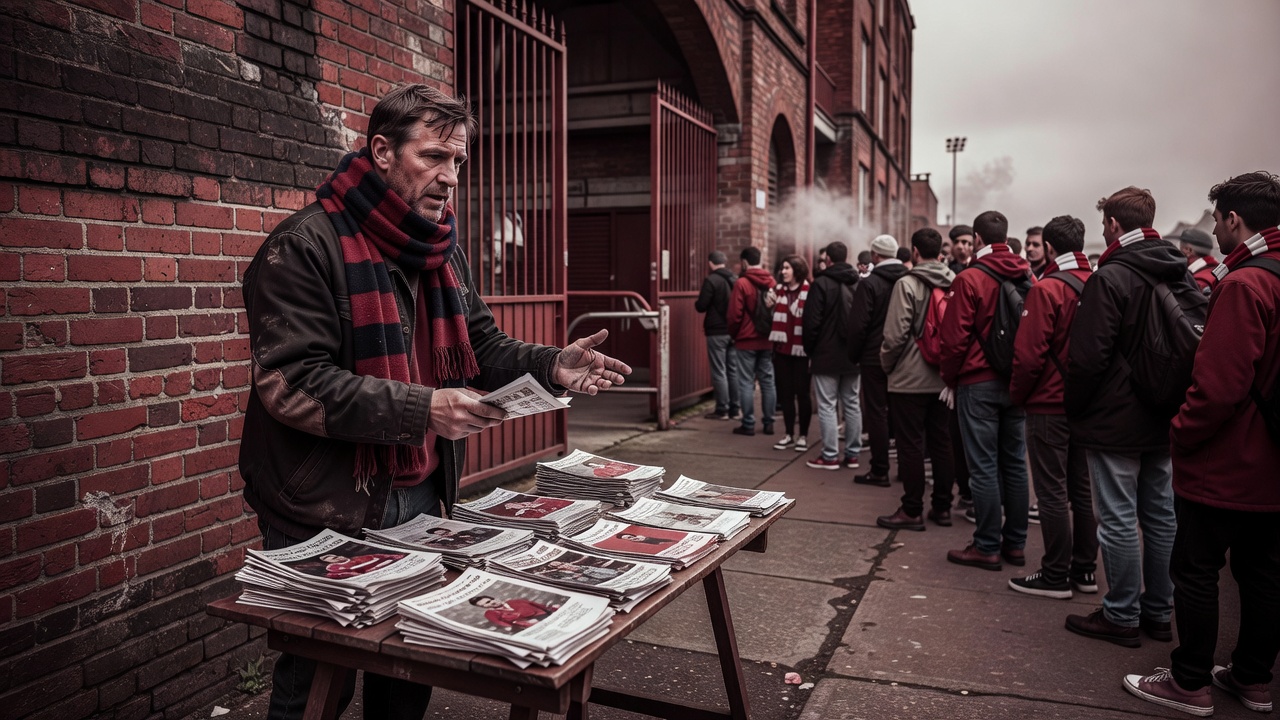
For most of football's history, supporters were treated as customers at best and a problem at worst. Newspapers wrote about the players and the board. Programmes printed the manager's notes. Nobody asked the people on the terraces what they thought. So, in the 1970s and especially the 1980s, the people on the terraces started writing it down themselves.
The photocopier revolution
Foul, published between 1972 and 1976, is usually cited as Britain's first football fanzine: irreverent, funny and sharply critical of the game's establishment. It did not last, but the idea did. In 1981 Liverpool's The End, co-founded by Peter Hooton, mixed football with music and terrace fashion. In 1986 When Saturday Comes appeared, a national fanzine that has kept publishing ever since.
By the late 1980s, hundreds of club fanzines were being sold outside grounds every Saturday. Cheap photocopying made it possible: anyone with a typewriter, scissors and glue could publish. The writing was humorous, angry and affectionate, sometimes all on one page. It mocked chairmen, celebrated cult heroes and reported the view from the away end that the newspapers ignored.
From pages to campaigns
The 1980s were a grim decade for supporters in Britain: crumbling grounds, perimeter fences and a government proposal for compulsory ID cards. The Hillsborough disaster in 1989, in which 97 Liverpool supporters lost their lives, and the long campaign by families and survivors for truth and justice, showed how badly fans had been failed and how determined they could be. Fanzine writers were among the loudest voices insisting that supporters be treated with dignity.
- Foul · 1972The first widely recognised British fanzine.
- The End · 1981Liverpool's mix of football, music and style.
- When Saturday Comes · 1986The national fanzine that never stopped.
- Supporters Direct · 2000Helped fans form democratic trusts at their clubs.